
How Does a Biometric Payment System Work?
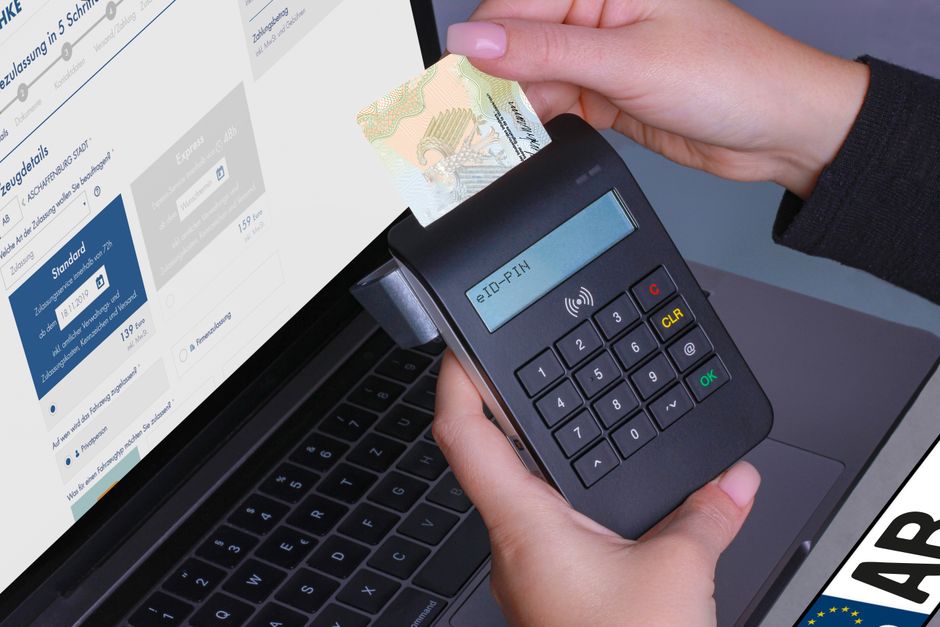
A biometric payment system uses a fingerprint, face, or palm scan to match you to an enrolled payment account, then sends a payment credential for transaction authorization. The system may store a biometric template on your device or with a service provider; those choices affect privacy and breach exposure. Convenience depends on reliable recognition, clear consent, deletion controls, and a usable fallback.
What is a biometric payment system, and how does it work at checkout?
A biometric payment system uses a measurable physical trait to authenticate a person before a payment is authorized. The checkout sequence usually has three distinct parts: enrollment, recognition, and payment authorization. A scan by itself is not the transaction; it is the step used to connect the person at the terminal with a payment account or credential.
At enrollment, you provide a biometric sample and link it to a payment method. For Amazon One, Reuters reported that shoppers could link a credit card to a palm print and then pay by scanning their palm. At checkout, the reader captures a new sample and compares it with enrolled data. If the system accepts the match, it passes a payment credential into the payment process, where the transaction must still be authorized.
The storage arrangement is central to the privacy analysis. A device can compare a biometric locally and keep its template on that device; another service can maintain templates centrally or process them through its infrastructure. The sources provided do not establish one architecture used by every fingerprint, face, or palm service. Retailers and consumers should therefore ask where matching occurs, what leaves the scanner, and what data is linked to the payment account.
Does a biometric payment system store an image of my fingerprint, face, or palm?
Not necessarily, but avoiding a raw image does not mean the system holds no biometric information. The Federal Trade Commission defines biometric information to include images or recordings and derived data—such as templates or faceprints—that encode characteristics and can identify someone. In other words, a mathematical representation can still be sensitive personal data.
Some systems may turn a scan into a template rather than retain the original image; the supplied sources do not verify the specific storage design of each product. Encryption can help protect data while stored or transmitted, and tokenization can reduce exposure of the underlying payment-card number during a transaction. Neither measure, on its own, answers who can access a biometric template, how long it remains available, or whether it is used for another purpose.
Consent and deletion policies complete the picture. The FTC says businesses should assess foreseeable consumer harms and use reasonable privacy and data-security measures, including appropriate retention and disposal practices. Before enrolling, look for an explanation of what is collected, who receives it, how it is protected, whether it is shared, and how to withdraw consent and request deletion. A claim that a system does not store photographs is not a substitute for these answers.
Can someone steal or copy my biometric data and use it to make payments?
Biometric data can be exposed or misused, but a stolen template does not automatically function as a payment credential in every system. The practical risk depends on the service’s matching design, safeguards, and separation between biometric authentication and payment authorization. A breached password can be changed; a face or fingerprint cannot be replaced in the same way, which makes retention and access controls especially consequential.
The FTC identifies unauthorized access, deepfake-enabled fraud, persistent tracking, and sensitive inferences from a person’s presence at locations as risks associated with biometric information. It also cites NIST research reporting demographic differences in facial-recognition false-positive rates, including higher rates for West and East African and East Asian faces than for Eastern European faces, as well as differences involving sex and age. These findings are a reason to ask how a service tests performance across users, not to assume that every biometric system has identical error rates.
False rejection is another security and reliability cost: a legitimate customer may not be recognized and may need another way to pay. For a retailer, enrollment consent and a functioning fallback are operational requirements as much as customer-service details. For a consumer, the relevant questions are whether a match alone can trigger payment, whether additional controls apply, and what happens when the scanner rejects or misidentifies a person.
Is palm payment safer than paying with a phone or contactless card?
Palm payment is not inherently safer than a phone or contactless card; the answer depends on how each system stores data, authenticates the user, and limits payment credentials. A biometric method can make checkout convenient, but it adds biometric collection and the associated risks of retention, access, and reuse. A phone or card avoids some forms of biometric collection at the retailer, though its protections also depend on the specific product and transaction setup.
For small businesses considering deployment, customer acceptance is a measurable adoption question, not a technical feature to assume customers will value. GeekWire reported that Amazon planned to end Amazon One retail service on June 3, 2026, citing “limited customer adoption.” Amazon One launched in 2020 and had expanded to more than 500 U.S. Whole Foods stores in 2023, according to the report. That history illustrates the gap between making checkout possible and persuading customers to enroll: convenience cannot compensate automatically for doubts about privacy, control, or provider trust.
Evidence on those doubts appears in a study by Cheng, Qiao, Yang, and Zhang in Electronic Commerce Research. Analyzing survey data from 394 respondents, the researchers found privacy concerns and privacy fatigue significantly related to intention to resist facial-recognition payment. The study also identified privacy experience, control, policy effectiveness, peer influence, and provider reputation as factors influencing privacy concerns. For a retailer, an adoption decision should therefore weigh not only scanner speed, but also customer choice, transparent policies, fallback methods, and the cost of maintaining a system customers may decline to use.
A practical comparison starts with four questions: where biometric templates are stored; whether the payment credential is kept separate; what protections apply to access and transmission; and how customers can opt out or delete their data. If a provider cannot answer those questions in plain language, the checkout benefit is difficult to compare against the privacy cost. A conventional payment option should remain available for customers who do not want to enroll or whose scan fails.
Frequently Asked Questions
What happens if a biometric scanner fails to recognize me?
The provided sources do not specify a universal failure procedure; it depends on the service. Before enrolling, check whether you can retry, use a card or phone, or ask staff for another payment method. A fallback matters because a false rejection can prevent checkout even when your account is valid.
Can I remove my biometric data or stop using a biometric payment service?
Deletion and unenrollment rules vary by provider, so read the service’s policy before enrollment. GeekWire reported that Amazon One users could unenroll and that Amazon said associated customer data would be securely deleted after the retail service ended. Confirm what is deleted, when, and whether payment-account data is handled separately.
Why might customers avoid biometric payments even when they are faster?
Convenience does not resolve concerns about collection, storage, reuse, or control over biometric data. A study of 394 respondents found that privacy concerns and privacy fatigue were significantly related to resistance to facial-recognition payment. Unclear deletion practices or low confidence in a provider can therefore outweigh a faster checkout.
Sources
- Federal Trade Commission, Commission Policy Statement on Biometric Information
- Reuters, “Amazon’s palm print recognition raises concern among U.S. senators”
- Cheng, Qiao, Yang, and Zhang, “Investigation on users’ resistance intention to facial recognition payment: a perspective of privacy”
- GeekWire, “Amazon is ending its palm ID system for retail, Amazon One, as it closes physical stores”
How Does Portugal’s Golden Visa Work in 2026?
A 2026 guide to Portugal Golden Visa routes, documents, minimum stays, the abolished property route, and the longer citizenship timeline.
Should I Use Canva, a Freelancer, or an Agency for My Small Business Design?
A practical framework for choosing Canva, a freelance designer, or an agency for small-business branding and promotional design.
How Much Does It Cost to Make a Commercial for a Small Business?
A practical guide to planning a small-business commercial budget, choosing video channels, and measuring leads or sales.
Build an Affordable Digital Marketing Stack Without Duplicate Tools
Choose a lean marketing stack by matching tools to goals, consolidating overlap, and upgrading only when a measurable workflow requires it.